
Protection that begins outside
Cunningham Perimeter Control
Your alarm should not have to wait for someone to reach a door or window.
Cunningham Perimeter Control combines professionally designed outdoor cameras,
AI person detection, your armed security system, and trained human operators
to help identify and deter suspicious activity around your property.
Monitoring service starting price. Compatible equipment and professional
The installations are quoted for your property.
Custom-designed and professionally installed virtual guard/video monitoring by Cunningham Security Systems
• Protecting New England since 1983
The missing layer in home security
Turn camera detection into a professional response
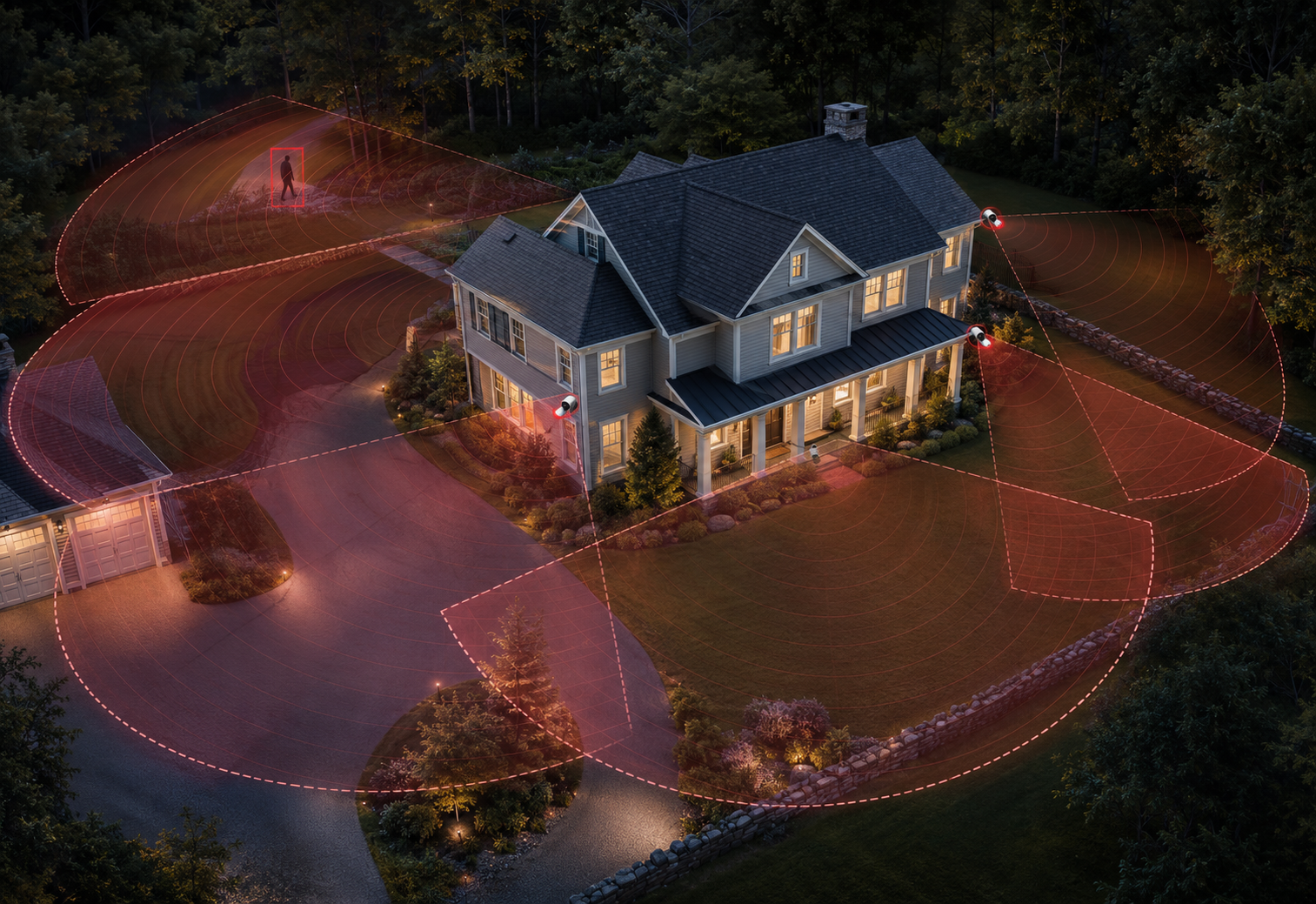
A conventional alarm commonly reacts when a protected door, window, or interior sensor is triggered. A self-monitored camera sends an alert and waits for you to notice it. Cunningham Perimeter Control is designed to create an earlier opportunity for action: while a detected person is still within a programmed exterior area.
Professionally designed coverage
Cunningham evaluates approaches, blind spots, camera height, lighting, network strength, and the routes a person would likely use to reach your home.
AI-assisted detection
When your system is in a designated armed mode, compatible cameras look for people inside the exterior detection zones Cunningham has programmed.
A trained person responds
A qualifying event is presented to an operator for review. If the activity appears suspicious, the operator follows the response plan created for your property.
The goal is not simply to record what happened. It is to create a chance to challenge, deter, and respond to suspicious activity before an attempted entry progresses.
How it works
Armed. Detected. Reviewed. Addressed.
Cunningham integrates the cameras, alarm status, detection rules, and operator instructions into one property-specific protection plan.
1. You arm the system
Monitoring activates in the modes and schedules selected during system design, such as Armed Away, Armed Stay, or an after-hours commercial schedule.
2. A camera detects a person or event
AI identifies a person inside a programmed exterior zone. People are treated as events by design; the system does not attempt to guess intent on its own.
3. An operator reviews video
A trained operator views the associated event and, when authorized and available, the live camera view to understand what is happening.
4. Your response plan begins
The operator may use two-way voice, contact your call tree, request assistance from authorities, or take another approved action based on the event.
A human decision at the critical moment
What a monitoring operator can do
AI identifies a person. The operator supplies context and judgment. Your customized instructions determine the appropriate response.
Assess the activity
Review the event to determine whether the person appears expected, harmless, uncertain, or suspicious.
Speak through the camera
Use two-way voice on compatible equipment to let the person know the property is monitored and ask them to leave or identify themselves.
Follow your call tree
Notify the people you select, such as a homeowner, neighbor, family member, property manager, manager, or on-site security contact.
Request emergency response
When the situation and your approved protocol call
for it, request police or another appropriate emergency response and relay available details.
Built around your home
No two perimeters should be programmed the same way
An effective monitored camera system depends on much more than attaching cameras to the corners of a building. Cunningham designs around the home, the landscape, the people who live there, and how the property is actually used.
- Camera placement for driveways, approaches, gates, garages, yards, and detached buildings
- Detection zones that focus on meaningful areas instead of roads, sidewalks, or neighboring property
- Nighttime image and lighting review
- Alarm-mode and schedule programming
- Custom voice-down and notification instructions
- System testing, customer training, and responsive local service
Residential properties that may benefit
Camera placement and monitoring rules are subject to applicable laws, property boundaries, equipment compatibility, and site conditions.
Local accountability
Professionally designed here—not assembled from a national online kit
Cunningham Security Systems has protected New England homes and businesses since 1983. Your cameras are selected, positioned, installed, and programmed by a local security team that can return to the property, adjust performance, and support the system after installation.
We connect Perimeter Control with the rest of your professionally monitored home security system, rather than leaving you to coordinate unrelated cameras, applications, and response settings.
- One company responsible for design, installation, programming, and service
- Local technicians who understand the property and system
- Professional monitoring resources backed by trained human operators
- Custom response instructions instead of a one-size-fits-all workflow
Privacy by clear rules
Your protection should not require giving up control of your property.
Cunningham programs the specific cameras, zones, alarm modes, and events eligible for monitoring. Operators are not assigned to watch your cameras continuously; they receive access as authorized and needed to handle configured monitoring events. This is a way we can provide a more customized service than Ring.
Cunningham does not sell customer personal information or use customer video footage for advertising. Authorized technology and monitoring partners process account, video, and audio information as necessary to deliver and support the service. See how this compares to a service like Ring in our Ring Virtual Guard review.
Read Cunningham’s privacy policy. Service-specific platform and monitoring-center privacy terms also apply.
Commercial perimeter protection
The same active protection for businesses and managed properties
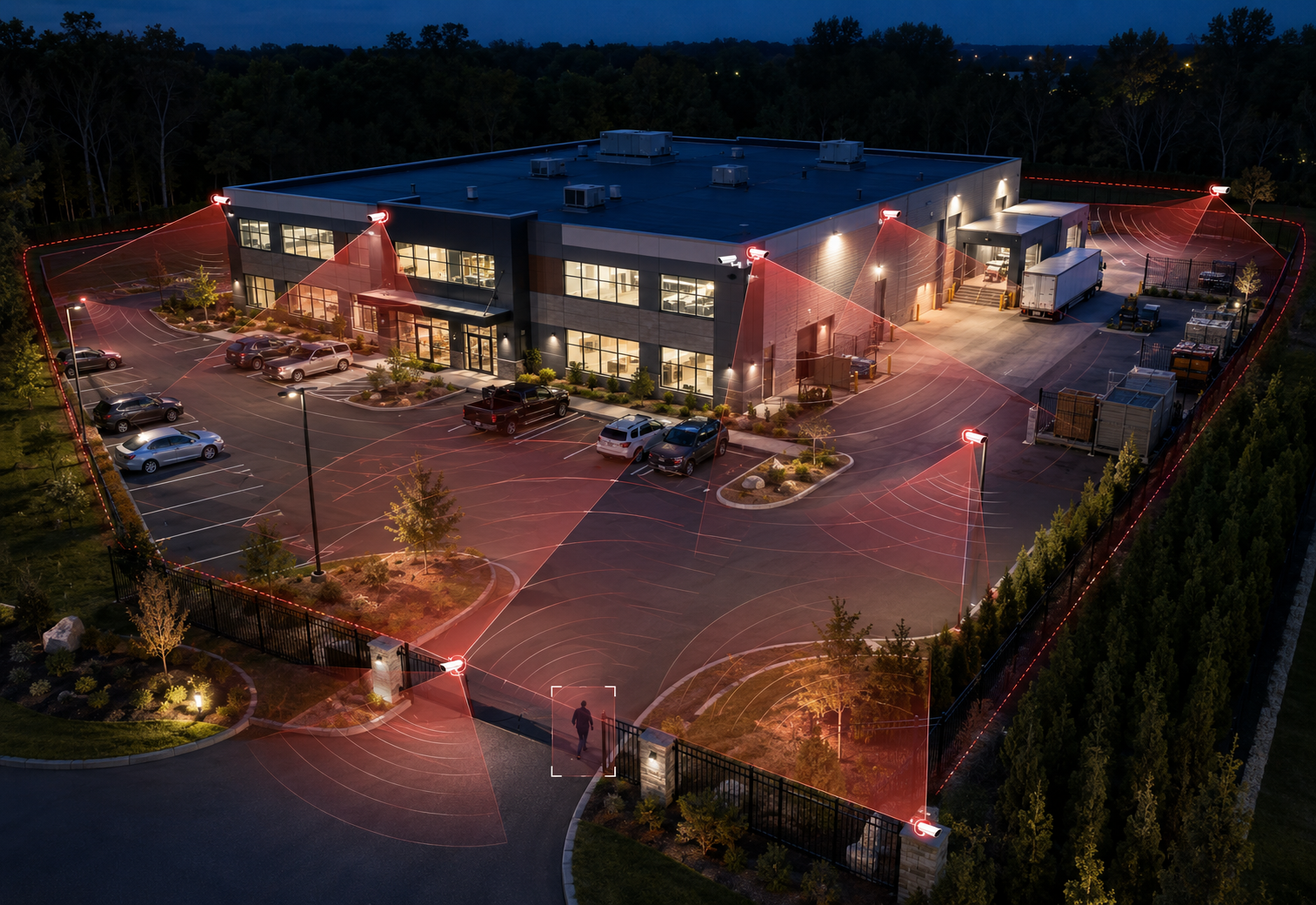
For a business, Perimeter Control can protect areas that are difficult or expensive to cover with an on-site guard. Cunningham aligns detection zones and response rules with business hours, employee access, deliveries, cleaning crews, and the property’s after-hours risks.
- Parking lots and building entrances
- Loading areas, gates, and service alleys
- Outdoor inventory and equipment yards
- Retail, office, industrial, and multifamily properties
- Vacant buildings and seasonal locations
Larger commercial properties or open areas may require additional cameras, speakers, lighting, network infrastructure, event capacity, or specialized response procedures.
Understand the difference
Three approaches to camera and alarm response
| Capability | Traditional monitored alarm | Self-monitored camera | Cunningham Perimeter Control |
|---|---|---|---|
| Typical trigger | A protected alarm sensor activates | The camera sends the owner a motion or person alert | A person enters a programmed camera zone while monitoring is enabled |
| Who reviews it? | The monitoring center receives an alarm signal; video may be available if configured | The customer must notice and review the alert | A trained operator reviews the qualifying video event |
| Voice deterrence | Not normally part of a basic alarm signal | The customer may speak through a compatible camera | An operator may speak through compatible cameras under the response plan |
| Response instructions | Standard alarm notification and dispatch protocol | Customer decides what to do | Customized call tree, voice-down instructions, and authority-notification procedures |
| Primary advantage | Reliable detection and response after an alarm sensor activates | Low-cost awareness and recorded evidence | Opportunity for professional review and deterrence while activity is still outside |
Pricing and system design
Perimeter monitoring starts at $99 per month
Every installation begins with a property assessment. Cunningham recommends the camera coverage, alarm integration, detection rules, and response plan appropriate for the site.
Your Cunningham design includes:
- Property-specific camera and detection-zone planning
- Integration with a compatible, professionally monitored alarm system
- Custom arming-mode, schedule, and event programming
- Customer-approved call tree and escalation instructions
- System testing and user training
Quoted separately: alarm and camera equipment, professional installation, connectivity or network improvements, standard alarm monitoring when not included, taxes, permits, additional event capacity, and site-specific upgrades.
Starting price and service availability depend on approved equipment, camera count, property layout, communications, programmed events, event volume, and response protocol. Local permits, false-alarm fees, or other jurisdictional requirements may apply.
Frequently asked questions
Cunningham Perimeter Control FAQs
What is Cunningham Perimeter Control?
Cunningham Perimeter Control is an alarm-integrated video monitoring service. When monitoring is enabled and a compatible exterior camera detects a person in a programmed zone, a trained operator reviews the event and follows the response plan Cunningham created with the customer.
How is it different from a traditional alarm?
A traditional alarm commonly sends a signal after a door, window, motion, glass-break, or other alarm sensor activates. Perimeter Control is designed to add an exterior layer by presenting qualifying camera events to an operator while the detected person may still be outside.
How is it different from ordinary camera notifications?
With self-monitored cameras, you are responsible for noticing and reviewing alerts. With Perimeter Control, qualifying person-detection events are routed to a trained operator during the programmed monitoring modes so the operator can evaluate and respond under your approved instructions.
Are operators watching my cameras continuously?
No. Perimeter Control is event-based. Cunningham programs the designated cameras, detection zones, alarm modes, and events eligible for monitoring. Operators access authorized video as needed to handle those configured events rather than continuously watching the property.
What happens when a delivery driver, guest, or family member is detected?
Any person entering an enabled detection zone may generate an event because the AI detects people rather than determining their intent. The operator reviews the available context and follows the customized procedure for the property. Cunningham programs zones, schedules, arming modes, and instructions to make the service useful without creating unnecessary responses.
Can the operator speak to someone on my property?
Yes, when the enrolled camera or connected audio equipment supports two-way voice and site conditions allow it. The operator may announce that the property is monitored, ask the person to identify themselves, direct them to leave, or use another approved message.
Will the operator always call the police?
No. The response depends on what the operator observes, the customer’s approved instructions, monitoring procedures, and applicable requirements. Options may include voice deterrence, contacting the customer or call tree, requesting police or another emergency response, or documenting the event.
Can I choose who is contacted?
Yes. Cunningham can build a property-specific call tree that may include the homeowner, family members, neighbors, property managers, employees, on-site security personnel, or other authorized contacts. Emergency services may be requested when appropriate under the approved protocol.
Can Cunningham use my existing alarm system or cameras?
Possibly. Cunningham will evaluate the alarm panel, communications, cameras, analytics, audio capabilities, video quality, and monitoring compatibility. Compatible equipment may be reused, while other systems may require a communicator, camera, recorder, speaker, or platform upgrade.
What happens if power or internet service fails?
Camera monitoring depends on working equipment, power, and communications. Cunningham will evaluate available battery backup, cellular alarm communication, network equipment, and other resilience options during design. A power or internet outage may interrupt some video functions even when the alarm system continues communicating over a backup path.
Does Cunningham sell customer information or video footage?
Cunningham does not sell customer personal information or use customer video footage for advertising. Authorized technology and monitoring partners process account, video, and audio information as necessary to provide, secure, and support the service. Applicable privacy policies and service terms describe those practices.
Is Perimeter Control available for businesses?
Yes. Cunningham can design Perimeter Control for parking lots, entrances, loading areas, outdoor inventory, equipment yards, managed properties, vacant buildings, and other commercial locations. Larger or more active sites may require additional equipment, infrastructure, event capacity, and customized pricing.
What does the $99 monthly price include?
Perimeter Control monitoring starts at $99 per month for a qualifying location and includes Cunningham’s custom monitoring design and response programming. Equipment, installation, standard alarm monitoring when not included, connectivity, permits, taxes, added event capacity, and site-specific upgrades are quoted separately.
Protecting New England since 1983
Build a security system designed to act before the threat reaches the door
Tell Cunningham about your home or business. We will evaluate the approaches, camera views, alarm integration, and response procedures needed to create your Perimeter Control plan.
Cunningham Perimeter Control is designed to help detect, assess, and deter qualifying activity; it cannot prevent every incident. Analytics and operator response depend on camera visibility, lighting, equipment, power, communications, system arming, programming, event availability, and other conditions. AI may miss or misclassify activity. Emergency dispatch and responder arrival are controlled by local authorities and cannot be guaranteed. Two-way voice requires compatible equipment and adequate site conditions.
